How much of a company can one person hold in their head?
AI lets one person do more and more. What will remain of familiar teams, and how many decisions can that person handle?
One agent has finished a task. Another has brought back research findings. While I am working through the first agent’s output, the second already has a question that determines what happens next. I need to get back into its context, understand the reasoning, make a decision. Then switch back again.
Each agent helps me work faster. Together, they create a workload I was not quite prepared for.
I am building a product for working with AI video. There is already a separate series of articles about it, but right now I am more interested in what happens to the person building it. The system is becoming more independent. It can handle more and more work. And I am becoming acutely aware of how much of that work still has to pass through my own head.
People have been speculating about one-person companies for a long time. The conversation usually turns to revenue, headcount, and how many professions AI might replace. But try looking at it from inside your own department. Suddenly, a small team with almost no internal approvals to wait for can do its work. What happens to the familiar division of roles?
I am already facing that question from the other side. I can set so much work in motion that keeping up with it mentally is becoming difficult.
And yet I worked to achieve exactly this speed.
Lean, small steps, short feedback loops: these have long been part of how I work. I want to try a decision in practice quickly and find out whether it is worth taking further. Cost of Delay is tangible. While a decision waits, we lose the chance to gain something from it, or to discover sooner that we were wrong.
With AI, the distance between an idea and a working change has shrunk considerably. I can try things I would once have hesitated to spend a team’s time on. I can change course when new market data arrives and test the consequences almost immediately. When you work alone, there is no long chain of internal approvals: the person who understands the problem can make the decision and start the work.
By my own working estimates, the video project is already at ten releases a day, with more than a hundred major epics behind it. An epic here means a substantial piece of work that needs research and design before implementation, followed by checking the result. The release count alone says nothing about how useful the product is, of course. But it gives some sense of the pace at which I have to work through decisions.
There is a commercial purpose behind this. I have a product in mind, check my plans against market data, and change them when the evidence calls for it. AI lets me move through that process faster. I still need to understand where I am going.
This is where speed comes at a price I had not felt so sharply before.
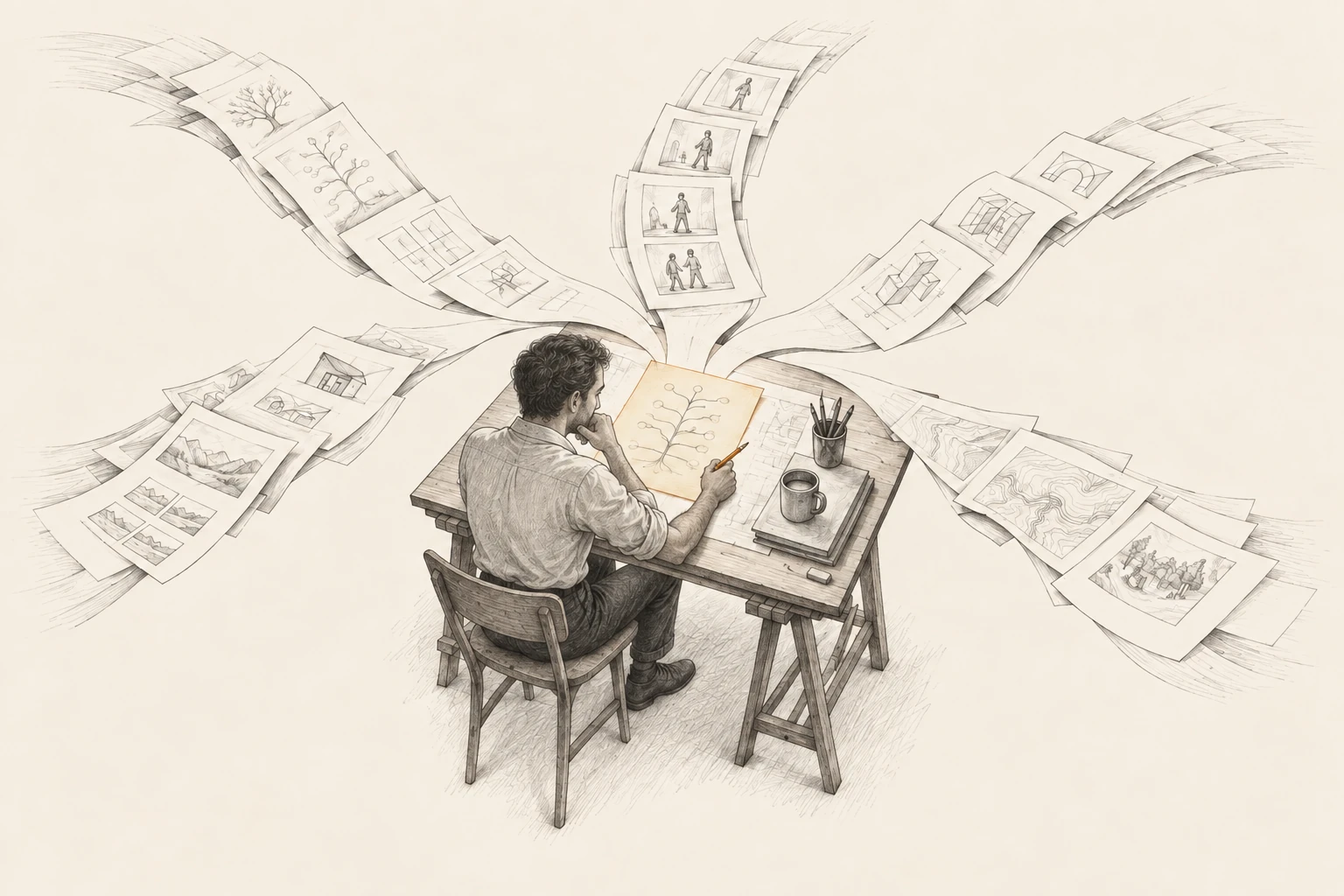
I no longer need to remember countless small details. An agent can find the relevant fact, retrieve an earlier decision, gather the material. I write down the principles I work by, keep founder’s notes, and record the reasoning behind product decisions. That gives the system enough context to act quite independently.
It helps. But there is still a gap between something recorded in a file and something I understand in my head.
To make a consequential decision, I need to get back into the subject. Why did we take on this task in the first place? What supports the proposed conclusion? What does it change for the product? The answers may already be in front of me. It still takes time to work through them and decide whether I agree.
This is when the difference between access to information and understanding it becomes particularly clear. Reading a short summary takes little time. Noticing that it leaves out a condition on which the entire conclusion depends is much harder.
The agents work in parallel. My attention cannot.
I can switch to another task, but some of my thoughts stay with the previous one. Sophie Leroy studied this effect as attention residue: unfinished work can hold on to our attention and interfere with what we do next. Her experiments concerned task switching, long before today’s agents. I recognise my own experience in that description when results arrive from several directions at once. Research and explanation by the author.
This leaves me in an unfamiliar position. I have been cutting waiting time throughout the process, and now completed work can sit waiting for me to understand it. Cost of Delay has not disappeared. Part of it now comes from the limits of my own attention.
I would not say that AI makes work harder in general. Many individual tasks have become much easier. In a CHI 2025 study, Hao-Ping Lee and his co-authors surveyed 319 knowledge workers about their use of generative AI. Many participants reported that tasks took less effort. Some of the work shifted towards checking AI responses and overseeing the task. These were self-reports about AI tools; the study did not measure overload from managing autonomous agents. Microsoft Research paper.
In my case, something else has come on top of those easier individual tasks: I can open up far more lines of work in the same amount of time. And the decisions they require reach me faster than I can give them proper thought. That is the overload I am experiencing. How common it is for others remains an open question.
Automation turns out to have a long history of something similar. In her 1983 paper “Ironies of Automation”, Lisanne Bainbridge wrote: “the more advanced a control system is, so the more crucial may be the contribution of the human operator.” She was examining industrial systems in which people were left with difficult tasks and the need to intervene when things went wrong. I recognise that feeling: execution increasingly happens without me, while the decisions that remain still require a deep understanding of what is going on. Original paper, Automatica.
That is why the analogy with pair programming in Extreme Programming makes sense to me. Part of a partner’s role is to help you understand the problem and check your reasoning. Responding to the charge that pair programming wastes resources, Martin Fowler writes: “But it’s only a waste if the hardest part of programming is typing.” He is talking about two people. I apply that logic to my work with AI: when code appears faster, it becomes especially clear how much work lies in the decision itself, in understanding what we want and why. Martin Fowler, Pair Programming.
I treat agents as working partners. We can discuss a decision, disagree, explore things I would not have the capacity to investigate alone. Trust grows through experience and checking the results. For consequential product decisions, I cannot yet turn that trust into unconditional agreement. The consequences of the choice are still mine to deal with.
In a small project, almost all the understanding can live with the founder. They remember why the idea came about and what they expect from the product. As it grows, some areas become too complex to grasp in passing. By a domain, I mean an area of the business such as the economics of the product or its production process. Someone needs to know how it works and why particular decisions are made there.
If my understanding of that area starts falling behind what is happening, having more agents available does not solve the problem by itself. They can gather more material, but someone has to be able to judge it. Otherwise, I risk approving convincing answers while gradually losing sight of where they lead.
This is the basis of my hypothesis about future teams. At some point, I will need another person who can take responsibility for an entire area and make informed decisions within it. They will have agents too. They will take on some of the work that currently requires me to load yet another large part of the product into my head.
We already know this division of responsibility: companies have people in charge of commercial operations, product development, and production. My prediction concerns how many people will be needed within those areas.
Some of the work that takes a department today will take just a few people.
That thought becomes uncomfortable when you picture your own department. Behind its name are people, careers, years of accumulated experience. Even partial automation can change the demand for familiar roles. Yet the understanding of that area, and responsibility for its results, will still need a home.
Researchers are already testing whether smaller groups can handle particular tasks. A study by Fabrizio Dell’Acqua and co-authors, published in Organization Science in 2026, analysed the work of 791 Procter & Gamble professionals. In one-day product ideation tasks, individuals using a conversational AI assistant achieved quality comparable to pairs working without AI. It is an interesting result, though it does not establish that one person can now run an entire company. The Cybernetic Teammate.
I think pressure from smaller competitors will push large companies to reconsider how they organise their teams too. In some places, this will mean cuts; elsewhere, it will let the same people do more. If a competitor solves the same customer problem with fewer people and reaches the market sooner, the familiar size of our department stops looking inevitable.
At this point, I want to ask the reader a question I also ask myself.
If carrying out your usual tasks becomes dramatically cheaper, which decisions will people still pay you to make?
My answer has to do with systems thinking. I consider it one of the most important skills for the future. A person needs to understand how decisions in their area affect the product as a whole. You can speed up video generation and end up with costs that make the product too expensive for anyone to buy. You can simplify one stage of the work and push all the complexity into the next. Each improvement can look perfectly convincing on its own.
In her work on leverage points, Donella Meadows examined the relationships, feedback, and goals that shape a system’s behaviour. It is a useful way to look at work with agents too: when reviewing their results, I need to see what those results collectively do to the product. The prediction about future demand for this skill is my own. Donella Meadows, Leverage Points.
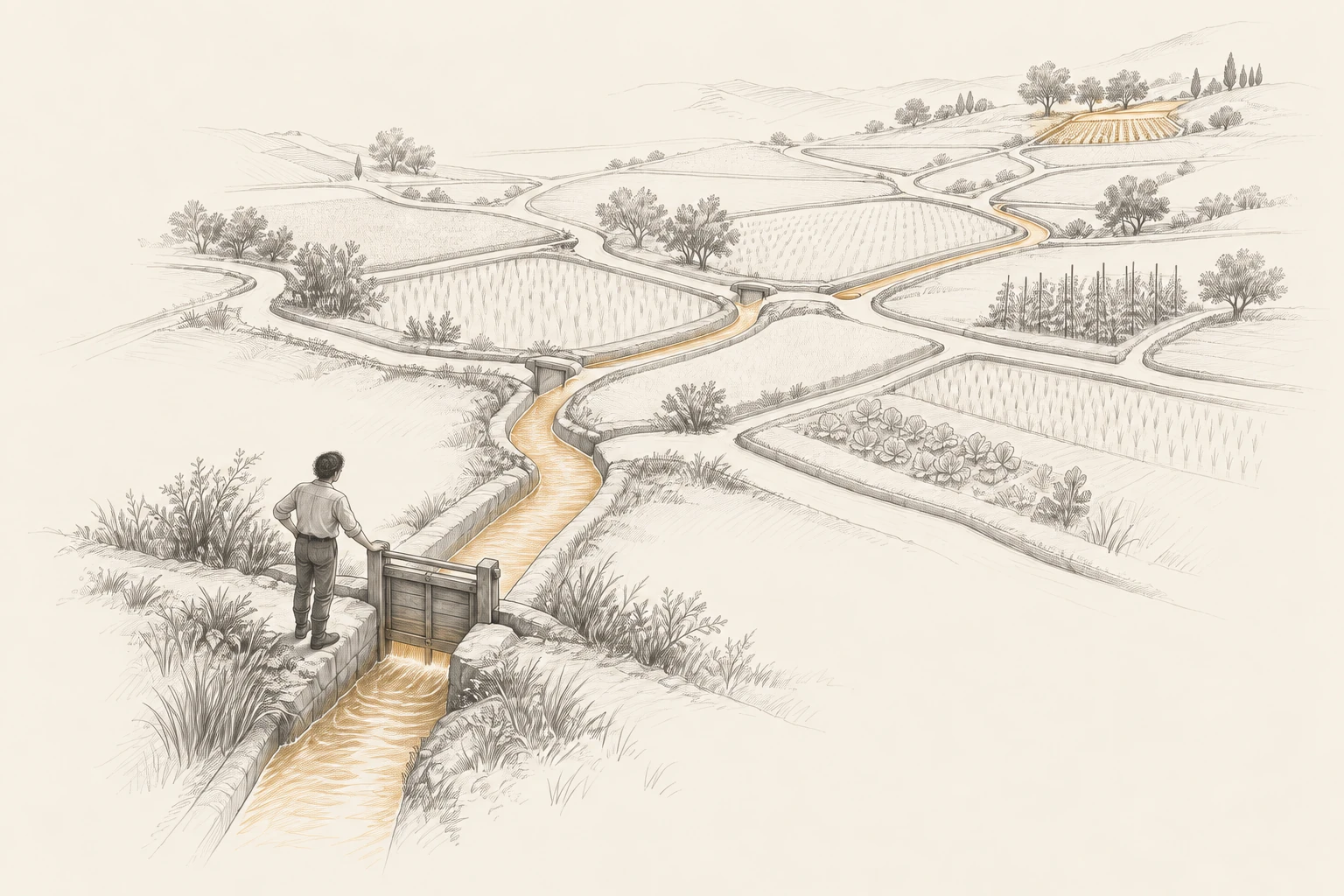
Alongside systems thinking comes another ability: explaining clearly and precisely what you want. While an idea lives only in your head, it is easy to miss how much of it is uncertain. Trying to assign the work to an agent quickly exposes that uncertainty. What result do we need? How will we know we have achieved it, and what must we avoid sacrificing to get there?
We used to need to be good at searching Google. Now we need to be good at writing the brief.
There is some irony in this: the specification is once again a personal concern for the person who wants the result. Finding and checking sources still matters, of course. But a system that is ready to act makes a vague brief particularly expensive. The work can already begin even though you have not quite decided what success means.
The old SMART framework is useful here. George Doran, who proposed it in 1981, recommended specifying what we want to improve, how we will measure progress, who will do the work, what results are realistic with the resources available, and by when. Those questions still make sense with AI. A complete brief also needs context and constraints: what to take into account, which changes are allowed, when to stop and come back to a person. SMART helps define the goal; the quality of the solution still needs a separate check. George T. Doran, original article in Management Review.
So this new role involves some rather old management work: understanding a system and explaining the desired change clearly enough for someone else to act. The cost of ambiguity now grows with the speed at which agents carry out your instructions.
People are already looking for a name for this role. Microsoft proposes agent boss: a person who builds agents, delegates work to them, and manages them. Its Work Trend Index 2025 also warns that too many agents can overwhelm human judgement. This is a company’s proposed terminology and forecast, rather than an established profession. What interests me most is the person who keeps hold of the domain knowledge behind all that agent activity. Microsoft, Work Trend Index 2025.
When I talk about “people of the future”, this is the everyday work I have in mind. One person can already take on things that would once have required them to assemble a team. I feel that freedom in my own project, and I have no wish to give it up. I can test a bold idea quickly, spot a mistake, change course. It is absorbing. And I can see how uncomfortable it will be to compete with someone who works this way if your own company takes months to change direction.
If a product can grow only as far as its founder can personally understand it, the limit of that model is still there. Perhaps new teams will form around precisely that limit: each person takes responsibility for an area and works with their own agents within it.
We could take the speculation further. Suppose systems learn to hold on to goals and account for consequences so reliably that human involvement in many decisions becomes rare. Perhaps some businesses will be left with a single founder. I do not know whether that will happen, or where. My experience today stops short of that point.
Today, I can set work in motion faster than before. I can see how much has become possible almost on my own.
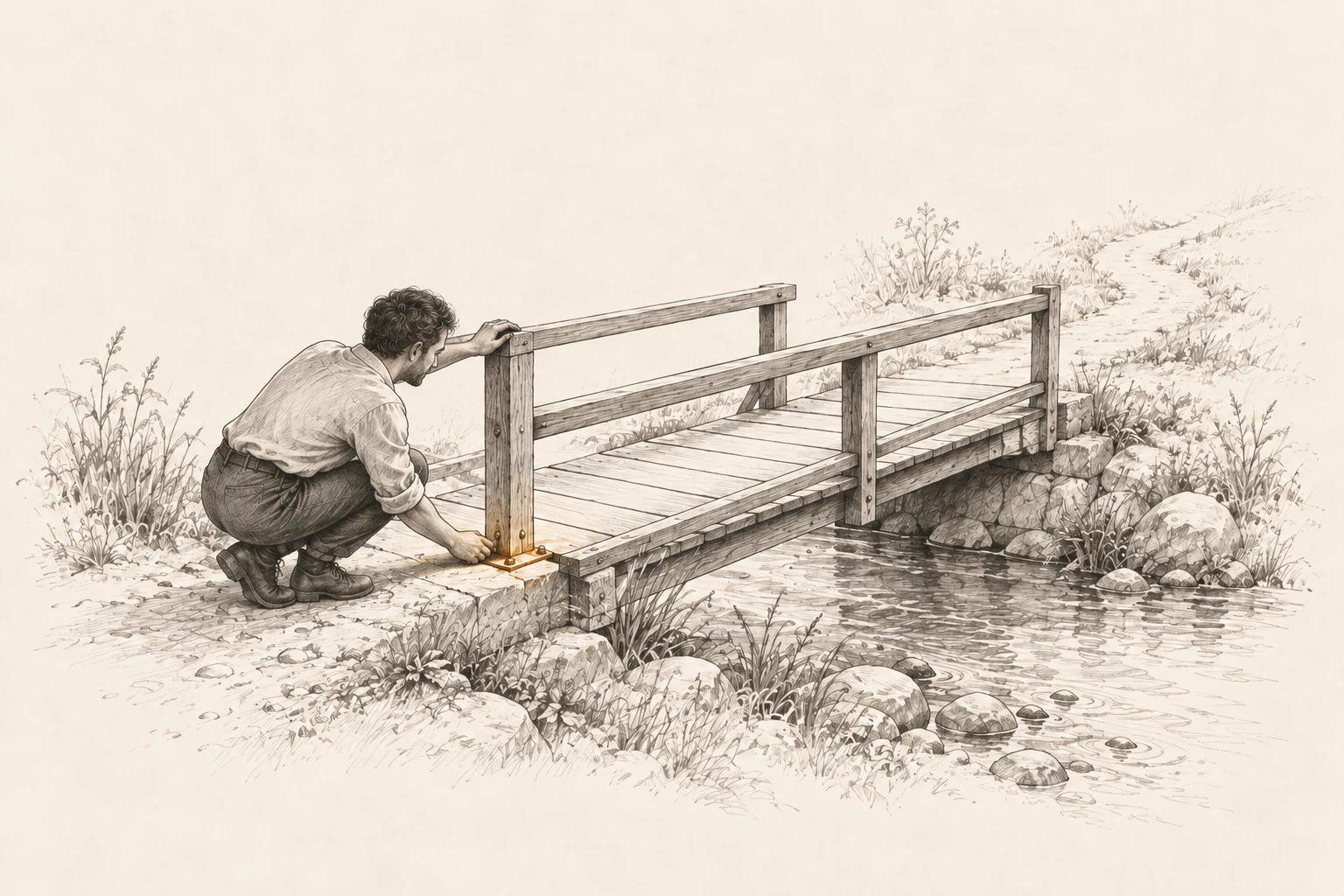
And increasingly, I reach a point where I need to stop and understand again what I am about to take responsibility for.
At least for now, we humans are responsible for the decisions we make. A machine can prepare a recommendation and make a convincing case for it. I decide whether to act on it, and I answer for the consequences. And those decisions can be serious: the company’s money or commitments to clients may be at stake. An agent having suggested the option does not spare me from dealing with what follows.
The next agent may already be working. I am still thinking about the previous one’s result.
How much of a company can I fit into one head? And how do we divide it among people when each of us has a team of agents?